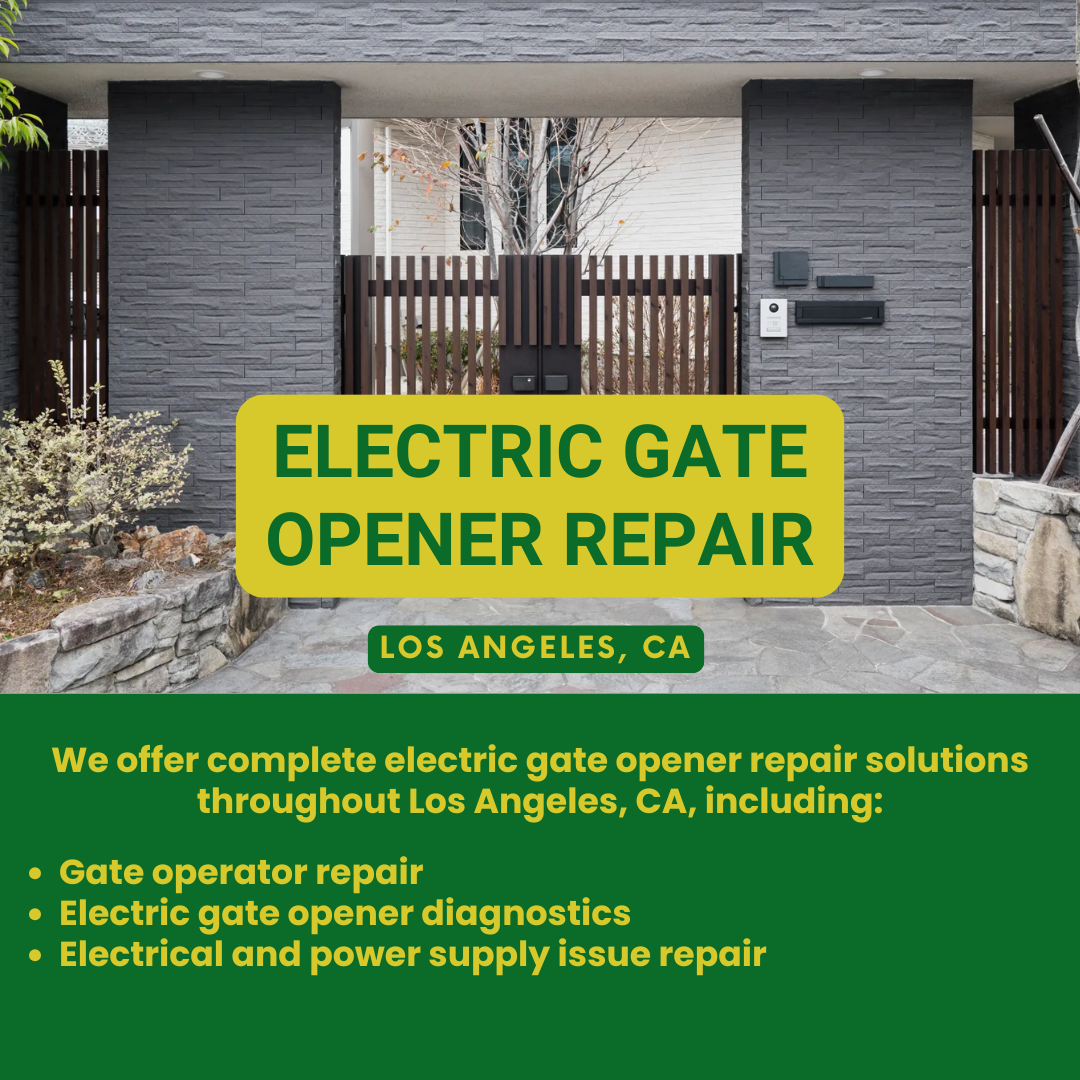


A sliding gate that grinds, hesitates, jumps during travel, or stops mid-cycle is almost always dealing with a track alignment problem. The track is the foundation of every sliding gate system, and when it shifts, corrodes, fills with debris, or gets damaged, the gate cannot move the way it was designed to. For residential homeowners, multi-family property managers, and commercial facility operators in Los Angeles, a gate that operates unreliably is a security gap and an access disruption that compounds quickly the longer it goes unaddressed.
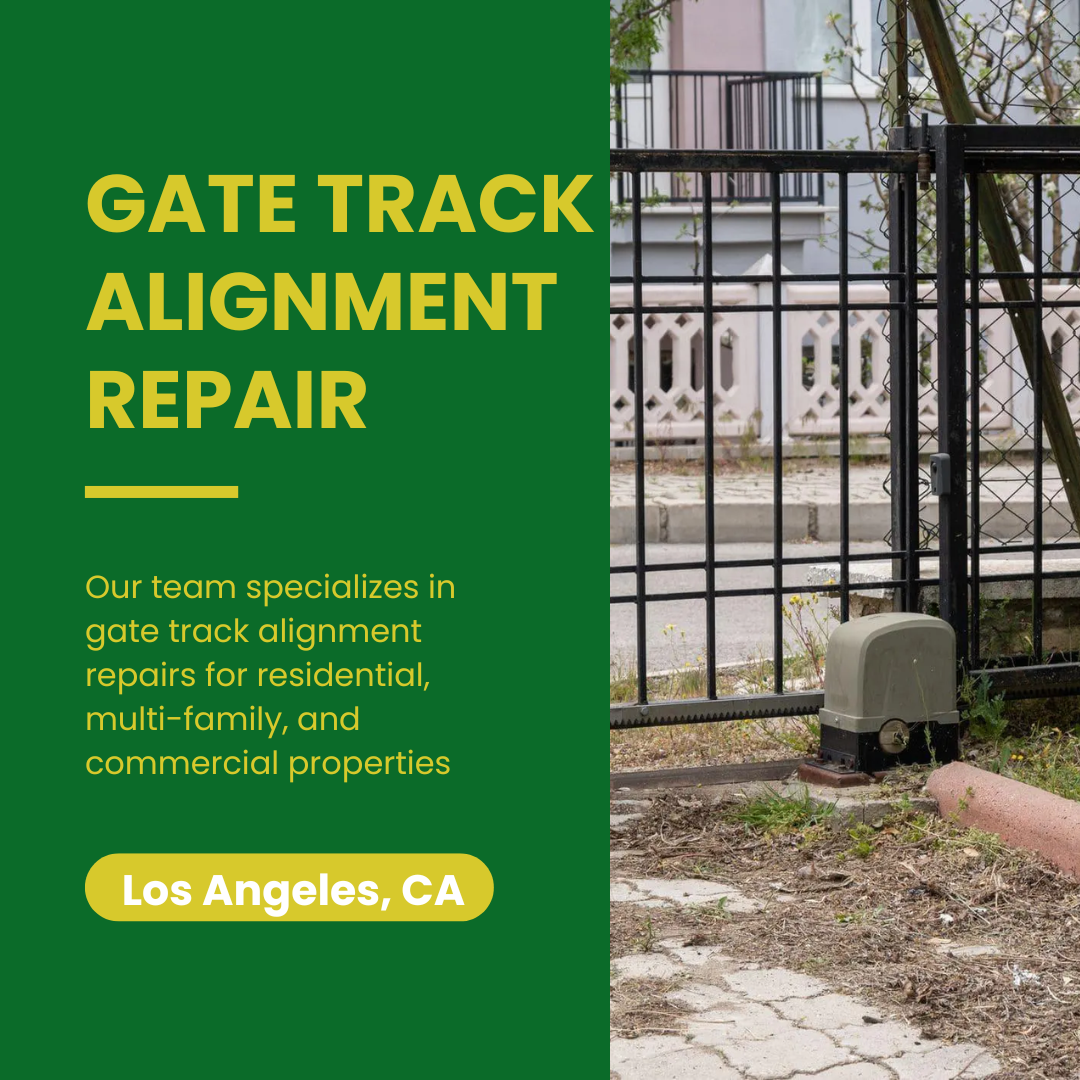
SoCal Garage Door and Gates specializes in gate track alignment repair across Los Angeles for all three property types. This article explains how track alignment problems develop, what the warning signs look like before a gate fully fails, and what a professional alignment repair involves from assessment through completion.
How Sliding Gate Tracks Work and Why Alignment Matters
A sliding gate moves horizontally along a track system that is embedded in or mounted to the driveway surface. The gate panel rides on rollers that sit inside or on top of the track, and the drive mechanism, whether that is a rack and pinion gear system, a chain drive, or a direct drive motor, pushes the gate panel along that track channel on every open and close cycle. The track keeps the gate moving in a straight, controlled path and prevents lateral movement that would otherwise allow the gate to drift, tilt, or disengage from the drive system.
For the track to do its job correctly, it needs to be level along its full length, properly secured to a stable substrate, free of debris and obstructions, and aligned with the gate rollers so that contact is consistent and even. When any of these conditions are compromised, the gate begins to work against the track rather than with it. The motor compensates by applying more force, which accelerates wear on the drive system, the rollers, and eventually the motor itself. What starts as a track problem becomes a motor problem if it is not corrected.
Why Track Alignment Problems Are Common in Los Angeles
Los Angeles presents a specific set of conditions that make gate track misalignment more common here than in many other markets, and understanding those conditions helps property owners recognize why this is a maintenance issue that needs periodic attention rather than a one-time fix.
Ground movement is the most significant factor. Los Angeles sits on expansive clay soils that swell when wet and contract when dry, creating seasonal movement in concrete slabs, pavers, and compacted aggregate that is small in any individual cycle but cumulative over years. Seismic activity, even the minor tremors that are part of daily life in Southern California and go unnoticed by most residents, contributes additional micro-movement that shifts embedded track sections gradually out of level. A track that was perfectly level at installation can develop a measurable slope or lateral deviation over three to five years without any single event causing it.
Vehicle impact is the second major cause of track misalignment on residential and multi-family properties. A car tire contacting the track at an angle during a turn, a delivery truck parking partially over the track, or a vehicle pulling forward slightly too far can bend or displace a track section in ways that are not immediately obvious but that affect gate travel immediately. Commercial properties with high vehicle traffic see this kind of impact-related displacement more frequently than residential installations.
Debris accumulation is a slower-moving but equally disruptive cause of track problems. Los Angeles generates significant quantities of wind-blown dust, leaf debris, and compacted organic material, particularly in neighborhoods near hillsides, parks, and tree-lined streets. Track channels that are not regularly cleared fill with compacted debris that raises the effective floor of the channel, reduces the clearance the rollers need to travel freely, and creates resistance that the gate motor must overcome on every cycle. In properties near the foothills or canyon areas of the city, this accumulation can build to the point of obstructing gate travel within a single season.
Corrosion is a factor on properties near the coast and in areas where sprinkler runoff or poor drainage keeps the track surface consistently wet. Steel tracks that are not galvanized or properly coated develop surface rust that roughens the channel interior, increases rolling resistance, and eventually causes pitting that disrupts smooth roller contact. In coastal neighborhoods from Pacific Palisades to Playa del Rey, track corrosion is a routine maintenance concern rather than an exceptional event.
Warning Signs That a Track Alignment Problem Is Developing
The earliest sign of a developing track issue is a change in the gate’s sound during operation. A gate that previously moved with a relatively smooth, consistent sound and has begun producing a grinding, scraping, or intermittent clicking noise is telling you that the rollers are no longer traveling cleanly through the track. The noise may only appear at certain points along the gate’s travel path, which often corresponds to the specific section of track where the alignment problem is concentrated.
A gate that hesitates or slows noticeably during operation without having changed its speed settings is experiencing increased mechanical resistance somewhere in the track system. When the gate consistently slows or stops at the same point in its travel path on multiple consecutive cycles, the track at that location is the first place to inspect.
Physical evidence at the track surface is worth checking periodically. Visible debris buildup in the track channel, rust discoloration along the track walls, sections of track that appear to have shifted relative to the pavement around them, or worn patches in the track surface where roller contact has been uneven are all signs that an alignment assessment is overdue.
The gate motor straining audibly or the operator triggering its overload protection and stopping the gate mid-cycle is a late-stage sign that the track problem has already reached the point of affecting the drive system. At this stage, the repair scope typically includes both the track alignment and an assessment of whether the motor and drive components have been damaged by operating under elevated load.
What a Professional Track Alignment Repair Involves
A gate track alignment repair is not a simple cleaning or adjustment in most cases. It is a systematic process that begins with a full assessment of the gate system, identifies the root cause of the misalignment, addresses that cause, corrects the track geometry, and verifies that the full system is operating within proper parameters before the job is complete.
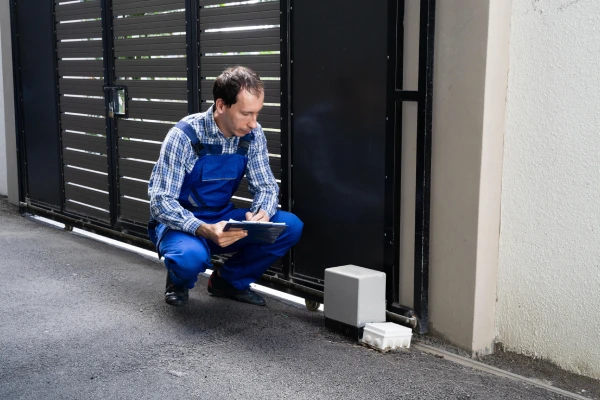
The assessment covers the full track length, checking level and lateral alignment at multiple points, inspecting the track mounting hardware and substrate condition, evaluating roller wear and contact pattern, and testing the motor under load to establish a baseline for how the system is performing before repairs begin. On properties where ground movement is the primary cause, the assessment also looks at how the driveway substrate has shifted and whether the track anchor points need to be reset in a modified location to account for the changed ground conditions.
Track cleaning is part of every alignment job regardless of the primary cause. Debris that has accumulated in the channel is removed, the track interior is inspected for rust, pitting, or deformation, and sections that are damaged beyond realignment are flagged for replacement. On commercial and multi-family properties where the track has seen high cycle volumes, track wear is evaluated against the remaining material thickness to determine whether the existing track can be realigned and continue in service or whether section replacement is the more practical path.
Realignment work involves adjusting, re-leveling, and re-securing the track sections that have shifted, resetting the anchor hardware where necessary, and confirming that the gate travels the full length of the track without binding, hesitation, or uneven roller contact. On properties where the substrate has moved significantly, this may involve cutting and re-pouring concrete around anchor points, which is a more involved repair that adds time but produces a stable, long-term result rather than a realignment that will need to be repeated as the underlying ground movement continues.
After the track work is complete, the roller set is inspected and replaced if wear is beyond acceptable tolerance, the motor load is retested to confirm it has returned to normal operating range, and the full gate system is cycled repeatedly to verify consistent, smooth operation before the job is closed.
For residential estates, multi-family communities, and commercial properties across Los Angeles dealing with gate track problems, SoCal Garage Door and Gates provides professional alignment repair with same-day service available for urgent access situations. Call (800) 897-6858 or visit lagaragedoorandgates.com to schedule a free on-site assessment.