

An electric gate opener that stops working correctly affects every person who enters or exits a property. For residential homeowners in Los Angeles, it disrupts the daily routine and creates a security gap. For multi-family and commercial properties, a malfunctioning gate opener can affect dozens of people at once and trigger liability concerns if the gate becomes a safety hazard. Getting to the right diagnosis quickly, and having a technician who can address gate operator repair, opener diagnostics, and electrical and power supply issues in a single visit, is what most property owners need when a gate opener fails.
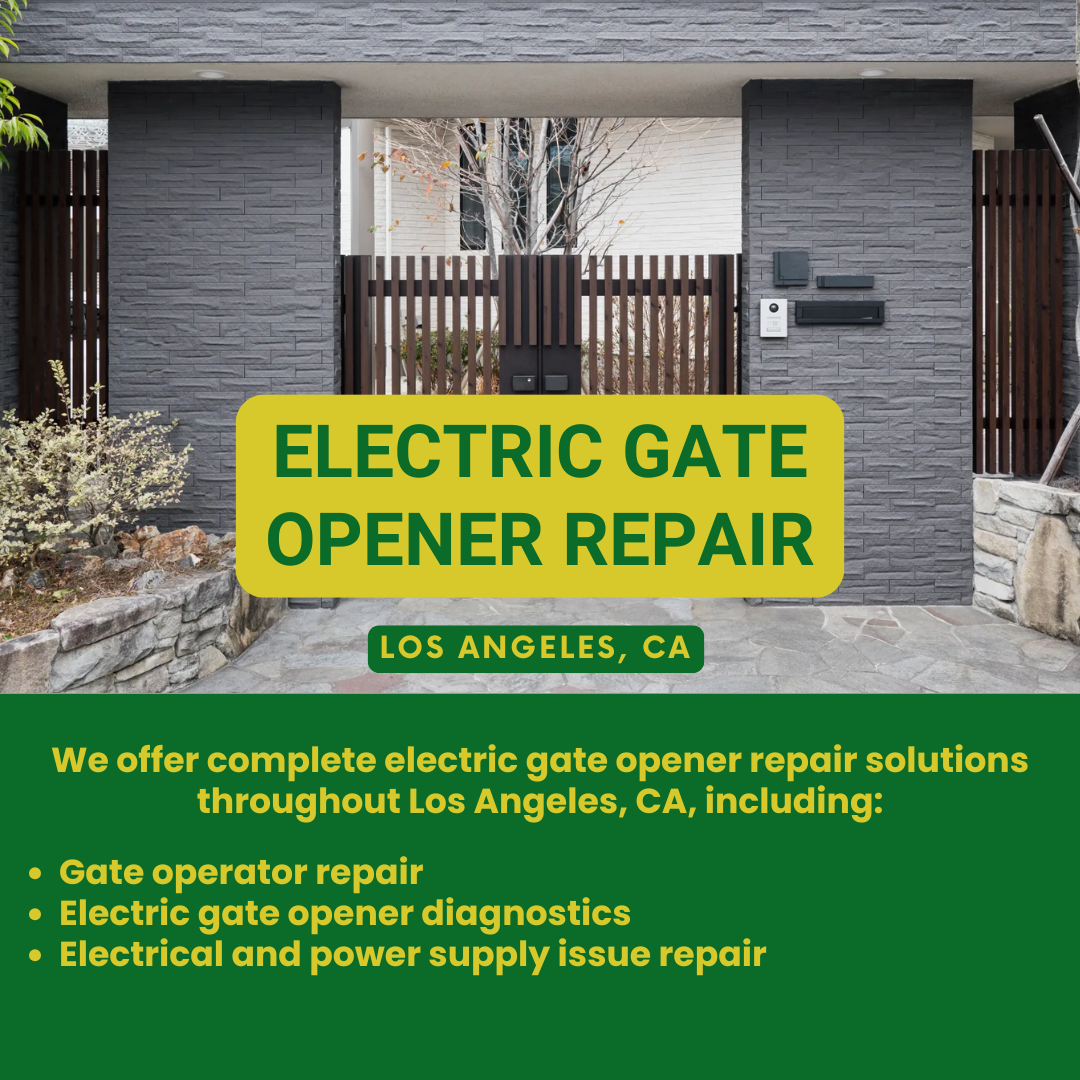
SoCal Garage Door and Gates provides complete electric gate opener repair throughout Los Angeles, covering gate operator repair, full system diagnostics, and electrical and power supply issue resolution for residential, multi-family, and commercial properties. This guide explains what each of these service categories involves, why opener failures are common in the Los Angeles environment, and what a professional repair process looks like from assessment to completion.
Gate Operator Repair
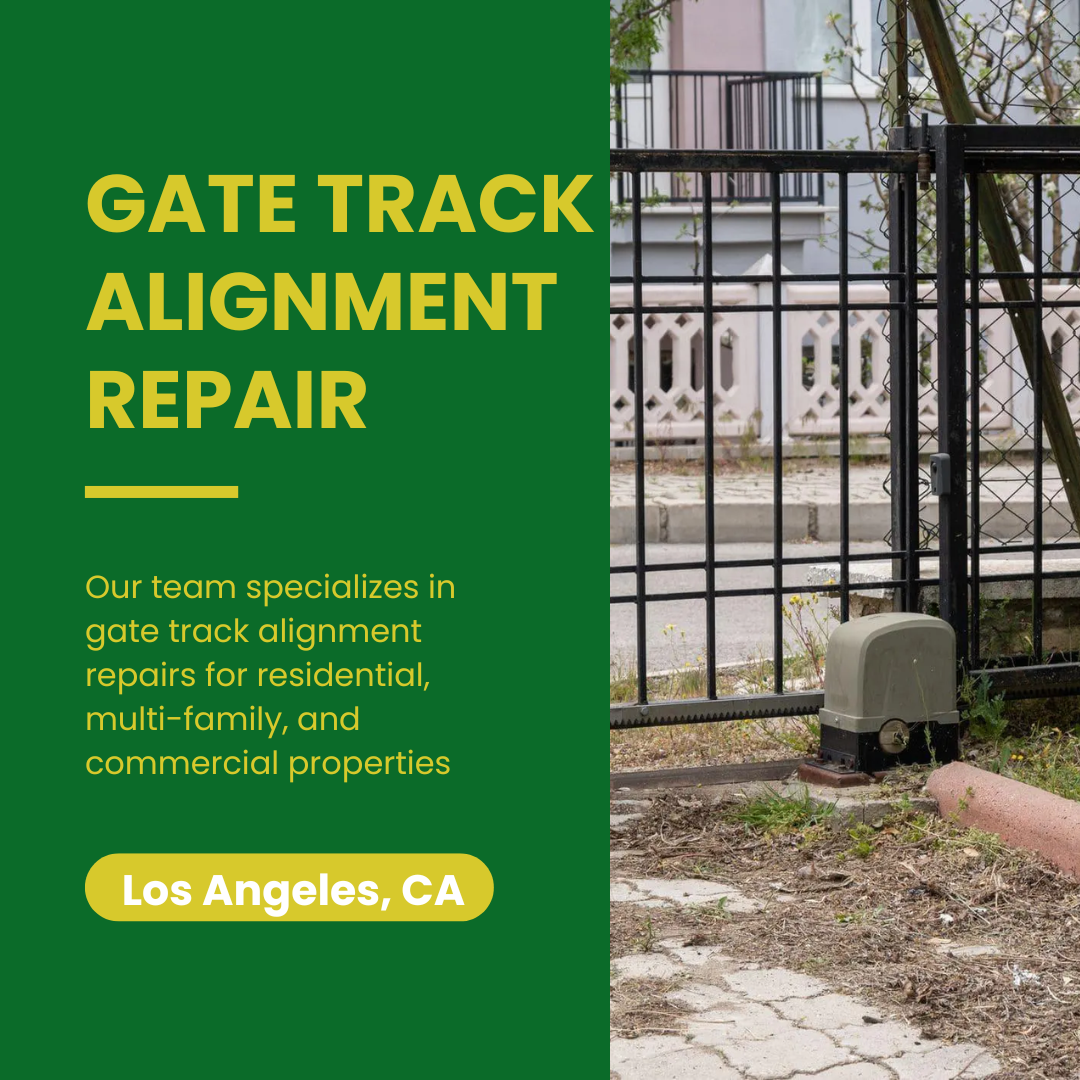
The gate operator is the motorized unit that physically drives the gate through its open and close cycle. On a sliding gate, the operator drives a rack and pinion or chain mechanism that moves the gate panel along the track. On a swing gate, the operator uses a hydraulic or electromechanical actuator arm to push and pull the gate panel through its arc. In both cases, the operator contains a motor, a drive mechanism, a control board, and a power supply, and a failure in any of these components affects the gate’s ability to function.
Motor failures in gate operators develop through several distinct pathways. A motor that is correctly sized for the gate and properly maintained can run for many years without significant issues. However, Los Angeles conditions accelerate wear in specific ways. The sustained heat in inland neighborhoods like Sherman Oaks, Encino, Van Nuys, and the broader San Fernando Valley pushes garage and outdoor electrical enclosure temperatures well above the ambient conditions that operator specifications are based on. Motors running in enclosures that regularly reach 110 to 120 degrees during summer are operating at the edge of their thermal tolerance, which shortens winding insulation life and accelerates bearing wear.
Operators that are undersized for the gate they are driving are a common issue on properties where the gate was upgraded to a heavier panel after the original installation, or where the original specification was incorrect. An undersized operator runs at or above its rated capacity on every cycle, which means it is always working at the margin. These operators fail earlier than properly specified units and often develop intermittent issues before the final failure because the motor is thermally stressing and recovering repeatedly.
Drive mechanism failures within the operator, specifically stripped gears, worn clutches, and failed limit switches, are the mechanical failure category most commonly confused with motor failure by property owners. When the operator runs but the gate does not move, or when the gate moves erratically without completing its full travel, the drive mechanism is the first place an experienced technician looks before condemning the motor. These repairs are typically less expensive than motor replacement and restore full function when the motor itself is still serviceable.
Electric Gate Opener Diagnostics
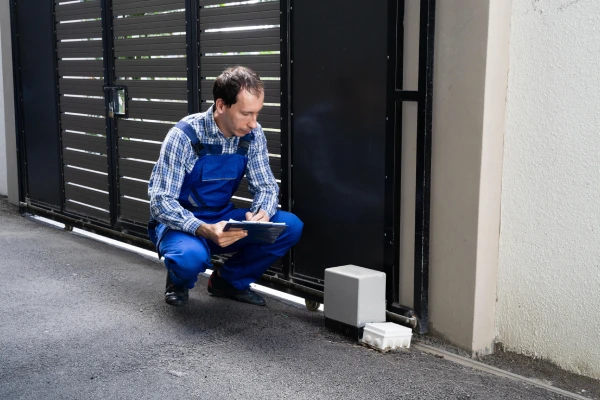
Diagnostics is the foundation of any accurate repair recommendation, and for electric gate openers, it is also the step most frequently shortcut by operators who replace parts based on the presenting symptom rather than the actual fault. A gate that will not respond to the remote is not necessarily an operator problem. A gate that reverses mid-cycle is not necessarily a motor problem. Accurate diagnosis requires a systematic process that tests each component and communication pathway independently.
The diagnostic process for an electric gate opener begins with the power supply and works forward through the system. Confirming that the operator is receiving stable voltage at the correct specification rules out utility supply issues, transformer failures, and wiring faults before any internal component testing begins. Operators that receive intermittent or fluctuating voltage develop board and motor issues that look like component failures but will recur after repair if the supply problem is not addressed.
Control board diagnostics involve reading fault codes where the system supports them, testing input signals from remotes, keypads, and loop detectors, and verifying that the board is responding correctly to each input. FAAC, LiftMaster, DoorKing, Viking, and other major gate operator brands used widely in Los Angeles all have diagnostic modes that experienced technicians can access to read the system’s own assessment of its operating status. Boards that are logging faults but have not yet failed completely often reveal the next failure point before it causes a complete shutdown.
Safety device testing is a critical part of the diagnostic process that has direct implications for property liability. Photo-eye sensors, vehicle loop detectors, safety edges, and obstruction detection systems are required to function correctly on automated gate systems in California, and a gate system where any safety device has failed or been bypassed is operating out of compliance. Diagnostics should always include confirmation that all safety devices are functioning as designed, not just the components that are visibly causing the presenting problem.
Remote and access control diagnostics cover the communication pathway between the remote, keypad, or access system and the operator receiver. Signal strength, frequency compatibility, programming status, and receiver condition are all evaluated. On Los Angeles properties where RF interference from neighboring smart home devices, commercial wireless systems, or nearby infrastructure creates a congested frequency environment, range and response issues that look like remote failures are sometimes resolvable through antenna repositioning or receiver upgrades rather than hardware replacement.
Electrical and Power Supply Issue Repair
Electrical and power supply issues are the category of gate opener repair most often underestimated in scope and most frequently the root cause of failures that have been diagnosed and repaired at the component level multiple times without resolving the underlying problem. A gate operator that has had its control board replaced twice in three years and continues to fail is almost certainly operating in an electrical environment that is causing the board failures rather than experiencing sequential independent board failures.
Transformer failures are a common power supply issue on residential and commercial gate systems in Los Angeles. Most residential gate operators use a low-voltage transformer to step down the 120V supply to the 12V or 24V operating voltage the operator requires. These transformers are outdoor-rated but not immune to heat fatigue, moisture intrusion, or overloading. A transformer that is delivering voltage outside the operator’s specified range causes erratic operation that can damage the control board over time. Transformer testing and replacement is a straightforward repair that is frequently overlooked in favor of more visible components.
Wiring condition is a persistent issue on older properties and on properties where irrigation systems, landscaping work, or construction has affected the conduit runs carrying power to the gate operator. Underground wiring that has developed insulation failures from root intrusion, physical damage, or moisture allows voltage to leak between conductors, which creates fluctuating supply conditions at the operator. In Los Angeles, where mature tree roots are a well-documented source of underground infrastructure damage in neighborhoods from Hancock Park to Brentwood to Los Feliz, wiring condition should be part of any diagnostic process on a gate that has had unexplained intermittent failures.
Battery backup systems on gate operators serve both a functional and a diagnostic purpose. Operators equipped with battery backup continue to function during power outages, which is a meaningful benefit in Los Angeles where summer heat events can cause rolling brownouts and outages. The condition of the backup battery also reveals information about the AC charging circuit: a battery that drains quickly despite consistent AC power supply indicates a charging fault that is worth addressing before the battery fails entirely during an outage.
Surge damage is a common cause of control board failure on Los Angeles properties. The combination of an aging electrical infrastructure in older neighborhoods, the frequency of power restoration events after outages, and the occasional equipment-related grid disturbances creates surge events that can damage sensitive electronics in gate operator control boards. Surge protection at the operator’s power supply is a low-cost preventive measure that is worth adding at the time of any electrical repair.
For complete electric gate opener repair across Los Angeles, SoCal Garage Door and Gates provides same-day service for urgent access situations, with experienced technicians equipped to handle gate operator repair, full system diagnostics, and electrical and power supply issues in a single visit. Call (800) 897-6858 or visit lagaragedoorandgates.com to schedule a free on-site assessment.